

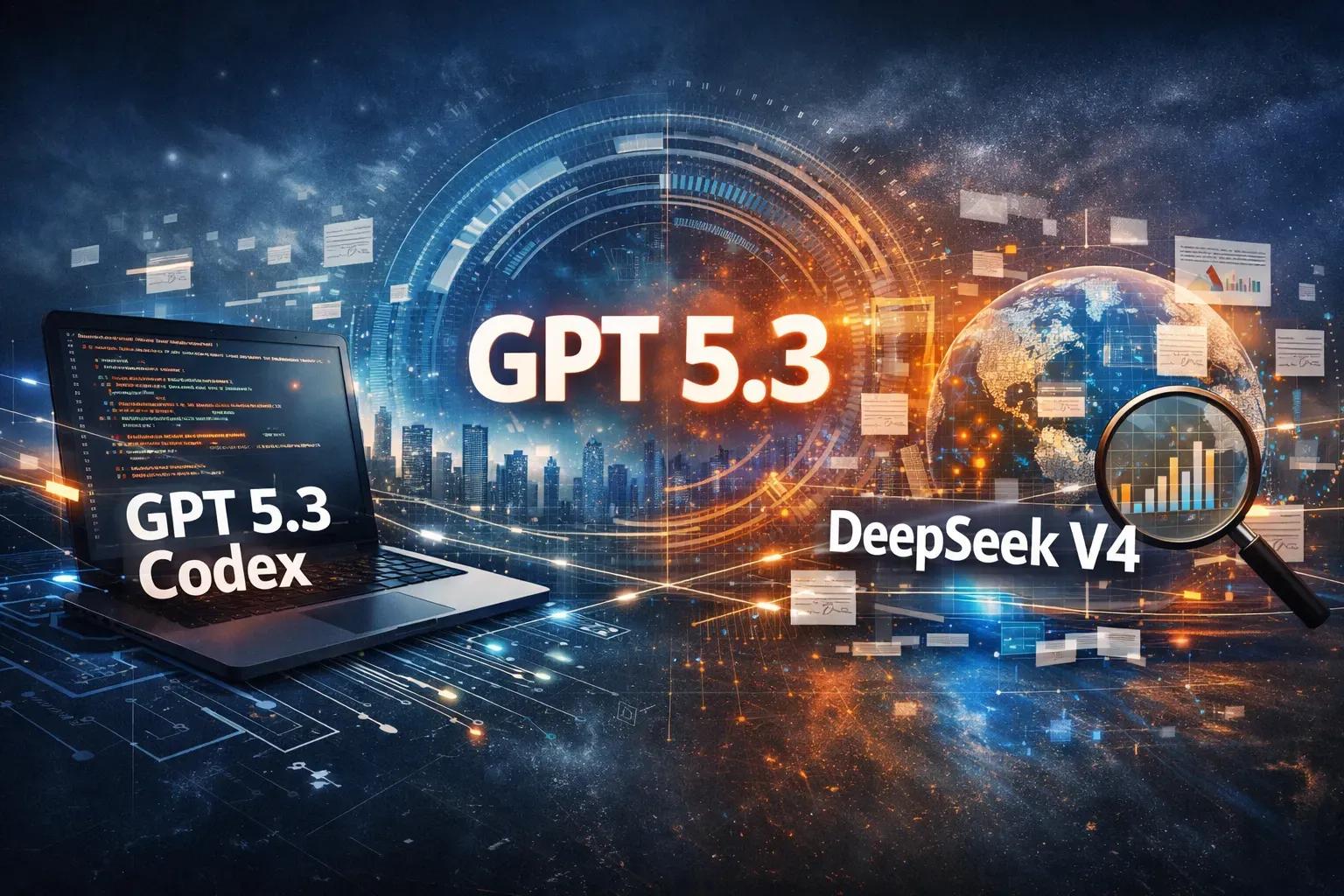
The rapid evolution of advanced language models has reached a point where individual tools no longer stand alone. They operate as part of a wider, connected ecosystem that shapes how developers, businesses, and creators interact with artificial intelligence. GPT 5.3 represents a significant step in that direction. Within this environment, GPT 5.3 Codex and DeepSeek V4 play distinct but complementary roles that deserve close attention.
From my perspective as someone who studies how digital systems gain visibility, trust, and long-term value, these models are not just technical upgrades. They are strategic components that influence how the entire GPT 5.3 ecosystem grows, adapts, and delivers meaningful results for real users.
Understanding the GPT 5.3 Ecosystem
Before diving into specific models, it helps to understand what the GPT 5.3 ecosystem actually represents. It is not a single product or interface. Instead, it is a network of capabilities built around a shared foundation of reasoning, language understanding, and adaptability.
GPT 5.3 acts as the core intelligence layer. Around it, specialized models expand functionality into areas like code generation, structured reasoning, and deep data analysis. This modular approach allows users to access more precise tools without sacrificing consistency or performance.
Key characteristics of the GPT 5.3 ecosystem include:
Strong contextual understanding across long interactions
Improved accuracy in complex reasoning tasks
Specialized extensions designed for real world workflows
Within this structure, GPT 5.3 Codex and DeepSeek V4 stand out because they address two of the most demanding needs in modern AI usage: software development and deep analytical search.
The Role of GPT 5.3 Codex in Modern Development
GPT 5.3 Codex is purpose built to understand, generate, and reason about code at a highly advanced level. While earlier code focused models were impressive, this iteration is far more aligned with how developers actually think and work.
Rather than simply producing snippets, GPT 5.3 Codex understands project structure, dependencies, and intent. It can assist with debugging, refactoring, and even architectural decisions. This makes it less of a code generator and more of a collaborative partner.
What makes GPT 5.3 Codex especially important in the GPT 5.3 ecosystem is its tight integration with the core model. It inherits the reasoning strength and contextual awareness of GPT 5.3 while applying it to technical logic. The result is code that is not only functional but also readable and maintainable.
For teams building products at scale, this means faster iteration cycles and fewer communication gaps between planning and execution. Developers can explain what they want in natural language and receive outputs that align closely with real requirements.
Why DeepSeek V4 Brings Depth to the Ecosystem
DeepSeek V4 addresses a different but equally critical challenge. As AI systems handle more data, the ability to search, analyze, and extract meaning from vast information sources becomes essential. DeepSeek V4 is designed to excel at deep contextual retrieval and analytical reasoning.
Instead of surface level keyword matching, DeepSeek V4 focuses on intent and relationships. It can identify patterns across documents, datasets, and structured information with impressive accuracy. This makes it especially valuable for research, intelligence gathering, and complex decision making.
In the GPT 5.3 ecosystem, DeepSeek V4 acts as a depth engine. While GPT 5.3 handles broad reasoning and language tasks, DeepSeek V4 dives deeper into specific knowledge spaces. Together, they create a balance between breadth and precision.
For professionals who rely on accurate insights rather than generic summaries, this capability changes how AI is used. It moves from a convenience tool to a serious analytical asset.
How GPT 5.3 Codex and DeepSeek V4 Complement Each Other
The real power of these models emerges when they are used together. GPT 5.3 Codex and DeepSeek V4 serve different functions, but their strengths overlap in productive ways.
Consider a scenario where a development team is building a data intensive application. GPT 5.3 Codex can handle the coding logic, API integration, and optimization. DeepSeek V4 can analyze large datasets, uncover trends, and validate assumptions that inform the application’s features.
This collaboration creates a workflow where reasoning, research, and execution are tightly connected. Instead of switching between disconnected tools, users operate within a unified environment powered by GPT 5.3.
The benefits of this synergy include:
Reduced friction between analysis and implementation
More informed technical decisions
Higher quality outputs with fewer revisions
This is why these models matter not as standalone innovations, but as integrated parts of a larger system.
Practical Impacts for Businesses and Creators
For businesses, the GPT 5.3 ecosystem opens doors to efficiency and scalability. GPT 5.3 Codex helps teams ship reliable software faster, while DeepSeek V4 supports smarter strategy and research. Together, they reduce operational overhead and improve consistency.
Content creators, analysts, and educators also benefit. DeepSeek V4 enables deeper exploration of topics, while GPT 5.3 ensures that insights are communicated clearly and persuasively. This combination supports high quality output without sacrificing originality or nuance.
From my professional experience, tools that balance depth and usability tend to outperform those that focus on one at the expense of the other. GPT 5.3, supported by these specialized models, achieves that balance effectively.
Long Term Significance of the GPT 5.3 Model Family
Looking ahead, the importance of GPT 5.3 Codex and DeepSeek V4 extends beyond current capabilities. They represent a design philosophy centered on specialization within a unified framework.
As AI adoption grows, users will expect tools that adapt to specific tasks while maintaining a consistent experience. The GPT 5.3 ecosystem is clearly moving in that direction. Each model adds a layer of expertise without fragmenting the overall system.
This approach also future proofs the platform. New models can be introduced without disrupting existing workflows, and improvements can be rolled out incrementally. For organizations investing in AI driven processes, this stability is just as valuable as raw performance.
What This Means for the Future of Intelligent Systems
The emergence of GPT 5.3 Codex and DeepSeek V4 signals a shift in how intelligent systems are designed and used. Instead of chasing general intelligence alone, the focus is now on creating ecosystems where specialized intelligence thrives.
GPT 5.3 provides the foundation, but it is the supporting models that bring real world value into focus. Codex transforms how code is written and maintained. DeepSeek V4 transforms how information is discovered and understood.
For anyone paying attention to the direction of advanced AI, this ecosystem is worth watching closely. It reflects a mature understanding of user needs, technical complexity, and long term scalability. As these tools continue to evolve, their combined impact will likely define how intelligent systems are measured and trusted in the years ahead.